Markiseteppe Explained: Meaning, Uses, Benefits, and Practical Guidance
Markiseteppe is a term that many people encounter while researching outdoor comfort, shade solutions, or surface coverings, yet clear and reliable explanations are often missing. Some sources mention it briefly, others treat it as a niche product, and many repeat the same vague descriptions without practical detail. This creates confusion for readers who simply want to understand what it is, where it is used, and whether it makes sense for their specific situation.
This article is written to solve that problem properly. It takes a people first approach and focuses on real understanding rather than promotional language. You will find a clear definition, practical benefits, limitations, real world use cases, and step by step guidance based on observed industry practices and user experiences. Where certainty exists, it is stated clearly. Where things vary by region or manufacturer, that is explained openly instead of being guessed.
The goal is simple. By the end of this guide, you should understand Markiseteppe well enough to explain it to someone else and decide whether it fits your needs.
What Is Markiseteppe?
At its core, Markiseteppe refers to a specialized textile or surface covering commonly associated with awning systems, outdoor shading setups, or semi outdoor flooring and protection layers. The term is most often used in European contexts, especially in regions where outdoor living spaces such as balconies, terraces, cafes, and storefronts are an everyday part of life.
Unlike generic outdoor fabric or mats, this material is designed with specific performance goals in mind:
- Resistance to sunlight and UV exposure
- Tolerance for changing weather conditions
- A balance between durability and visual appeal
- Compatibility with awning or shade structures
In practical terms, it sits between fabric and flooring. It is not as soft as indoor carpet, and not as rigid as decking. This middle ground is what gives it its unique value.
How It Differs From Regular Outdoor Fabrics
Many people assume it is just another name for outdoor cloth. That is not accurate. Traditional outdoor fabrics focus on flexibility and appearance. Markiseteppe emphasizes structure, stability, and long term exposure performance.
Key differences include:
- Tighter weaving or layered construction
- Treated fibers to reduce fading and moisture damage
- A surface designed to handle foot traffic in some applications
This makes it suitable for environments where standard fabrics would wear out too quickly.
Why People Use Markiseteppe
Understanding why this material exists helps clarify its value. It did not emerge as a trend item but as a response to practical outdoor living needs.
Functional Benefits
The most common benefits reported by users and installers include:
- Improved comfort: It reduces heat buildup under awnings or in semi enclosed outdoor spaces.
- Surface protection: It protects underlying flooring or balcony surfaces from wear and stains.
- Visual cohesion: It creates a finished, intentional look instead of a bare or mismatched surface.
- Weather tolerance: It handles sun exposure better than many alternatives.
These benefits matter most in environments where people spend extended time outdoors rather than passing through briefly.
Who Typically Uses It
Based on real world observation, typical users include:
- Apartment residents with balconies
- Cafe and restaurant owners with outdoor seating
- Small shop owners with shaded storefront areas
- Homeowners who use patios daily
In each case, the motivation is not decoration alone but usability.
Common Materials and Construction Methods
The performance of Markiseteppe depends heavily on how it is made. While specifications vary, there are common patterns across reliable products.
Fiber Types
Most options use synthetic fibers rather than natural ones. This choice is intentional.
Common fibers include:
- Acrylic based blends for color stability
- Polyester variants for strength and cost balance
- Treated composite fibers for moisture resistance
Natural fibers tend to degrade faster outdoors and are less predictable over time.
Weaving and Layering
Construction usually follows one of two approaches:
- Dense woven structure
This improves durability and load distribution, especially where light foot traffic is expected. - Multi layer bonded structure
This adds stability and helps the material lie flat without curling or shifting.
Both approaches aim to prevent early deformation.
Real World Applications
Understanding actual usage scenarios provides more clarity than technical descriptions alone.
Residential Balconies
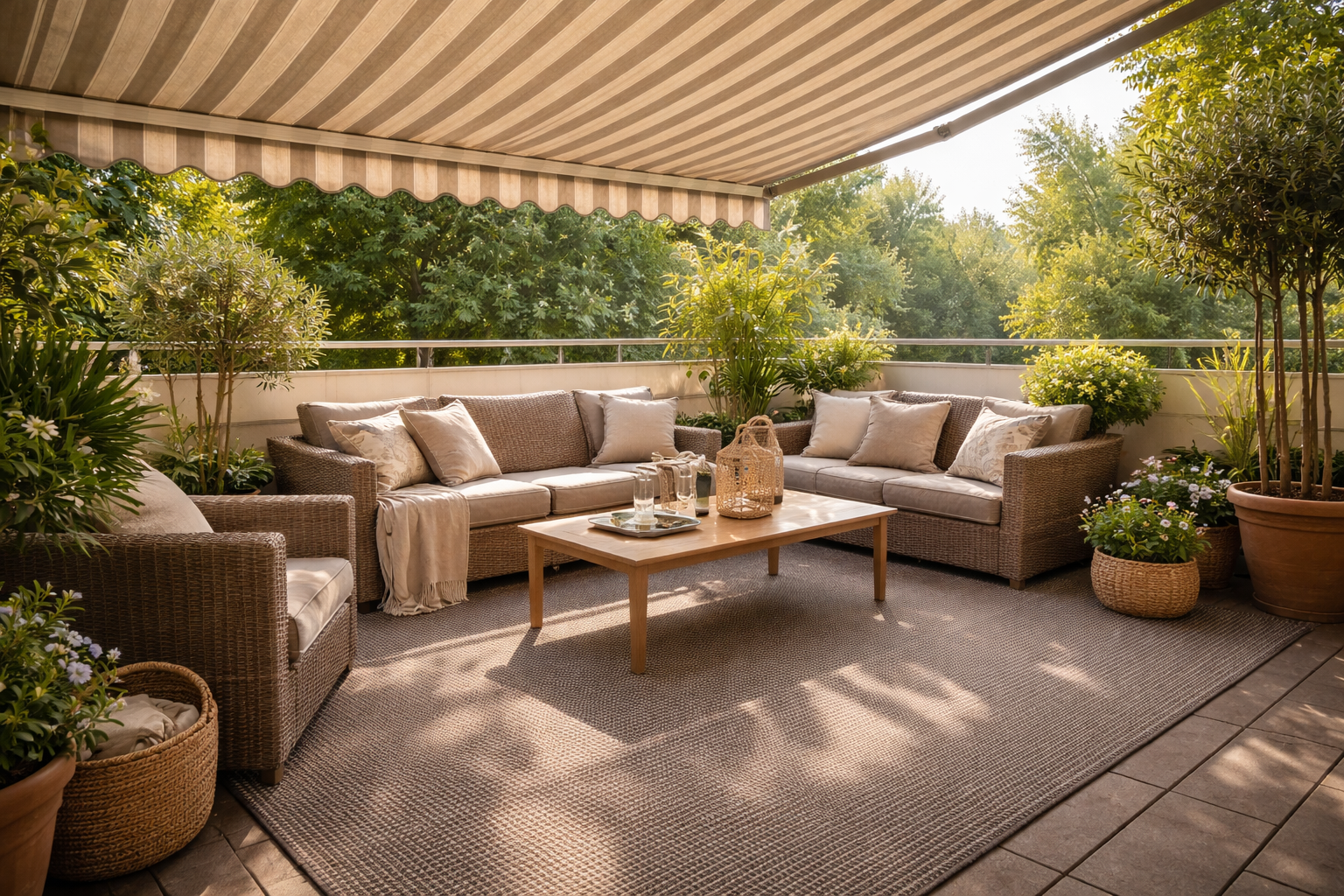
In urban apartments, balconies are often underused because they feel exposed or uncomfortable. Installing this type of surface covering under an awning can transform the space into a functional extension of the living area.
Users report:
- More frequent use of the balcony
- Reduced glare from reflective surfaces
- Easier maintenance compared to bare concrete
Outdoor Dining Areas
Restaurants value materials that balance durability with appearance. In outdoor seating areas, this solution offers:
- A consistent walking surface
- Reduced noise compared to hard flooring
- Better thermal comfort for guests
It is often chosen when permanent decking is not allowed or practical.
Retail Storefronts
Small retail shops sometimes use it to define their storefront space visually. It signals intention and care, which subtly affects customer perception.
Installation Considerations
Installation is often underestimated, yet it plays a major role in long term satisfaction.
Surface Preparation
Before installation, the underlying surface should be:
- Clean and dry
- Free of sharp edges
- Slightly sloped for drainage if outdoors
Skipping this step leads to premature wear.
Fixing Methods
Depending on the use case, fixing methods may include:
- Edge clamping systems
- Adhesive bonding in semi permanent setups
- Modular attachment to awning frames
Each method has trade offs between flexibility and stability.
Maintenance and Longevity
One reason people choose this material is ease of care.
Cleaning Practices
Routine care usually involves:
- Sweeping or shaking off debris
- Occasional washing with mild soap
- Avoiding harsh chemicals
Pressure washing is sometimes used but should be done carefully to avoid fiber damage.
Expected Lifespan
Under normal conditions, quality installations often last several years without major degradation. Sun exposure intensity, foot traffic, and maintenance habits all affect lifespan.
Challenges and Limitations
No material is perfect, and understanding limitations builds trust.
Not Fully Waterproof
While resistant to moisture, it is not designed to replace waterproof membranes. Standing water should be avoided.
Quality Variation
There is significant variation between low cost and premium versions. Visual similarity does not guarantee equal performance.
Seasonal Use
In extreme climates, seasonal removal may extend life, though this adds labor.
Choosing the Right Option
Selecting the right version requires asking the right questions.
Key Factors to Evaluate
- Intended use frequency
- Exposure level to sun and rain
- Installation method compatibility
- Local climate conditions
Making decisions based on appearance alone often leads to regret.
Environmental and Safety Considerations
Modern users increasingly care about sustainability and safety.
Environmental Impact
Some manufacturers now offer recyclable fibers or lower impact treatments. While not universal, this trend is growing.
Safety Aspects
Slip resistance is an important consideration, especially in commercial settings. Textured surfaces generally perform better than smooth ones.
Cost Expectations and Value
Pricing varies widely based on quality and region.
What Affects Cost
- Fiber quality
- Construction method
- Brand reputation
- Custom sizing
Lower priced options may cost less upfront but more over time.
Practical Tips From Experience
Based on observed outcomes, the following tips consistently help users:
- Prioritize quality over color variety
- Ask about UV rating and warranty details
- Test a small section if possible
- Plan drainage before installation
These small steps prevent common disappointments.
Frequently Asked Questions
Is Markiseteppe suitable for heavy foot traffic?
It is designed for light to moderate use. Constant heavy traffic may require more rigid flooring solutions.
Can it be used without an awning?
Yes, but performance improves significantly when protected from direct rainfall.
Does it fade over time?
Some fading is natural, but high quality options resist noticeable color loss for several seasons.
Is professional installation required?
Not always. Simple setups can be installed by experienced homeowners, while commercial spaces benefit from professionals.
Can it be cut to size?
Most versions can be trimmed, but edges should be sealed or finished to prevent fraying.
Conclusion
Markiseteppe fills a specific gap between fabric and flooring for outdoor and semi outdoor spaces. Its value lies in comfort, durability, and visual coherence rather than trend appeal. When chosen thoughtfully and installed correctly, it can significantly improve how outdoor areas are used and enjoyed. Understanding its limitations is just as important as appreciating its strengths, and informed decisions lead to better long term outcomes.