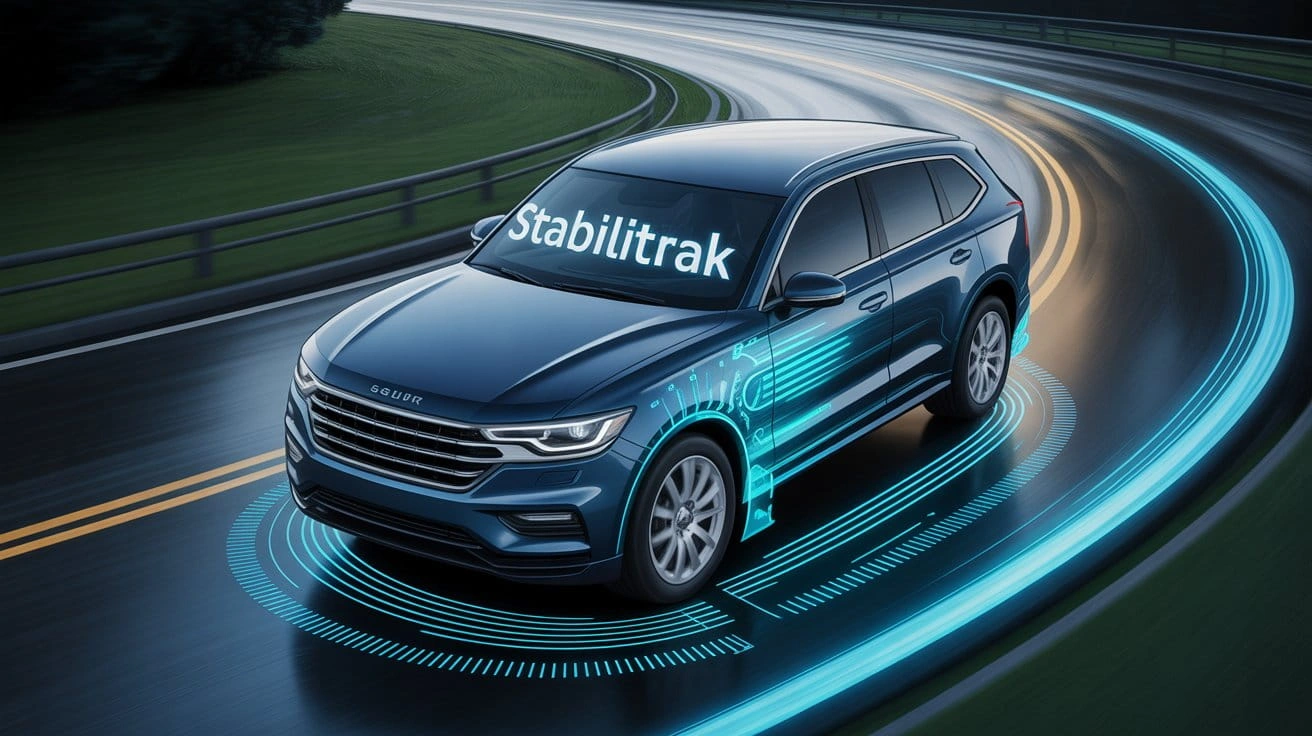
Stabilitrak Explained: How GM’s Stability System Protects You
Modern vehicles are no longer just machines that move from point A to point B. They actively assist drivers in maintaining control, especially when road conditions become unpredictable. One of the most important safety technologies found in General Motors vehicles is Stabilitrak.
Drivers often encounter this term when a dashboard warning appears or while reading a vehicle manual. This guide explains what Stabilitrak does, why it matters, how it works in real life, and what actions to take if something goes wrong. If you drive a Chevrolet, GMC, Buick, or Cadillac, understanding this system is essential for both safety and confidence behind the wheel.
What Is Stabilitrak?
Stabilitrak is General Motors’ proprietary electronic stability control system designed to help drivers maintain directional control of their vehicles. It continuously monitors steering input and vehicle movement, then intervenes when it detects a mismatch between where the driver intends to go and where the vehicle is actually heading.
Unlike basic traction control that focuses mainly on wheel spin, Stabilitrak addresses overall vehicle stability, particularly during cornering, sudden lane changes, or slippery conditions. Its goal is simple: help keep the vehicle on its intended path.
How Stabilitrak Works in Real Driving Conditions
Stabilitrak operates quietly in the background, activating only when necessary. It relies on multiple onboard sensors that measure speed, steering angle, lateral movement, and rotational motion.
When the system senses a loss of stability, it responds by:
- Applying braking force to individual wheels
- Reducing engine power when necessary
- Coordinating with the braking and traction systems
These corrections happen in fractions of a second, often before the driver realizes a loss of control has begun. The result is smoother handling and improved safety during unexpected events such as sharp turns or slick roads.
Why Stabilitrak Is Important for Driver Safety
Improved Control on Slippery Roads
Rain, ice, gravel, and snow reduce tire grip. Stabilitrak helps compensate by preventing excessive sliding and assisting with directional control when traction is compromised.
Increased Confidence During Emergency Maneuvers
Sudden swerves to avoid obstacles are one of the most common causes of loss-of-control accidents. Stabilitrak helps maintain balance during these abrupt steering inputs.
Reduced Risk of Spinouts and Rollovers
By selectively applying braking force, the system minimizes the chances of dangerous vehicle rotation or rollover scenarios, particularly in taller vehicles like SUVs.
Stabilitrak vs Traction Control: Understanding the Difference
Many drivers confuse these two systems, but they serve different purposes.
Traction control primarily manages wheel spin during acceleration. Stabilitrak focuses on vehicle direction and balance, especially during turning or evasive maneuvers.
While both systems often work together, Stabilitrak addresses a broader range of stability concerns and plays a more critical role in accident prevention.
Common Reasons Stabilitrak Warnings Appear
When a warning message or indicator appears, it means the system has detected a condition that prevents it from functioning correctly.
Sensor-Related Issues
Sensors are essential for accurate monitoring. A malfunctioning wheel speed sensor, steering angle sensor, or yaw sensor can disrupt the system’s calculations.
Electrical or Battery Problems
Low battery voltage, corroded terminals, or unstable electrical connections can interfere with communication between system components.
Brake System Irregularities
Because Stabilitrak relies on braking intervention, worn brake parts, low fluid levels, or hydraulic issues may trigger a warning.
Control Module Malfunctions
The electronic module that processes sensor data can fail due to software glitches or internal faults, disabling the system until repaired.
What to Do When a Stabilitrak Warning Appears
When the warning shows up, take a calm and methodical approach.
- Check whether the system was manually turned off by mistake
- Restart the vehicle to clear temporary electronic glitches
- Inspect the battery and terminals for looseness or corrosion
- Avoid aggressive driving until the issue is diagnosed
- Have the vehicle scanned for diagnostic codes by a professional
Driving without this system increases risk, especially in poor road conditions, so timely inspection is important.
Real-World Driving Examples
Scenario One: Slippery Highway Exit
A driver exits a highway ramp during heavy rain. As the vehicle begins to understeer, Stabilitrak applies braking to specific wheels, keeping the car aligned with the curve instead of sliding outward.
Scenario Two: Sudden Obstacle Avoidance
During a nighttime drive, a deer runs into the road. The driver swerves sharply. Stabilitrak helps stabilize the vehicle by correcting excessive yaw, preventing a spin.
These examples show how the system operates in real situations without requiring driver input.
Limitations of Stabilitrak
Despite its advanced design, the system has physical and practical limits.
It cannot override the laws of physics. Excessive speed, worn tires, or reckless driving can overwhelm its capabilities. It also depends heavily on accurate sensor data, meaning poor maintenance or improper repairs may reduce effectiveness.
Drivers should view Stabilitrak as a safety aid, not a substitute for attentive driving.
Maintenance Tips to Keep Stabilitrak Working Properly
Regular vehicle maintenance plays a major role in keeping the system reliable.
- Maintain proper tire pressure and alignment
- Address warning lights promptly
- Keep the battery and charging system in good condition
- Use qualified technicians for suspension and brake repairs
Preventive care reduces the chances of unexpected system failures.
Frequently Asked Questions
What does Stabilitrak do?
It helps maintain vehicle stability by correcting steering and braking when a loss of control is detected.
Is it safe to drive when the warning light is on?
Yes, but with caution. The vehicle loses an important safety feature, especially in slippery or emergency conditions.
Does Stabilitrak activate all the time?
No. It only engages when sensors detect instability or loss of directional control.
Can weather conditions trigger Stabilitrak activation?
Yes. Rain, snow, ice, and gravel frequently cause the system to intervene.
Final Thoughts: Why Stabilitrak Still Matters in 2026
As vehicles continue to adopt advanced driver-assistance technologies, systems like Stabilitrak remain foundational to road safety. It works seamlessly with modern braking and traction technologies to reduce accident risk and improve driver confidence.
Understanding how this system functions—and responding correctly when warnings appear—empowers drivers to make safer decisions. When maintained properly, Stabilitrak continues to be one of the most valuable safety features in GM vehicles today.